
- Details
- Category: News
- Published: 17 February 2016
A mixture of various perspectives (from the police and European Monitoring Agency to a user`s and NGO`s viewpoints) were given at ECAD organized conference in Riga to explain the popularity of new psychoactive substances in the Baltic Sea region. ECAD thanks Riga Stradins University for the smooth cooperation and advanced conference premises.
Chemically produced synthetic cannabinoid mixes under a generic name of Spice are widely known in Latvia as well as in Sweden, Estonia, Russia and Lithuania. These new psychoactive substances are not controlled by the UN Conventions and European law enforcement agencies had to fight with wind mills for almost a decade, chasing small dealers. At the same time, drug experts are warning about the unknown pharmacology and toxicology of the products starting the end of 2000-ies until today.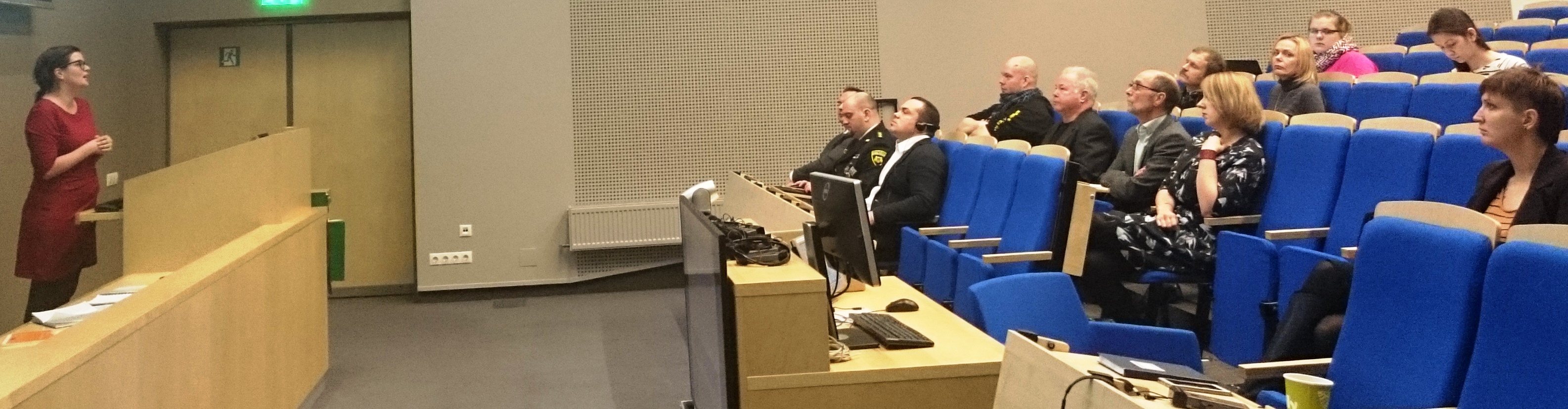
Many synthetic cannabinoid mixes were nothing new but unsuccessful pharmacological probes, taken in order to study certain receptors in the brain: CB1 and CB2, which are very important for chemical research, according to Rita Jorge, EMCDDA scientific analyst (Download conference presentation - UPDATED).
Already in 2009, EMCDDA listed Latvia along with the UK (biggest share, 42%), Romania and Ireland, as having the highest number of the online retailers selling spice mixtures. These substances became new to the retail market in Latvia, but were actually for sale in European webshops since 2007- 2008 and were strikingly cheap.
As its notorious popularity grew, numerous trading points got opened in Riga and its suburbs, selling small packages of mixes labelled “Spice”, “Yucatan Fire” etc., bearing no legal responsibility for the items that were available for anyone because of the low prices. Anyone, from young teenagers with no family support, coming from an orphanage, to well-off youngsters from the most prestigious high schools, could be the user. Students were selling to their peers at schools and person-to-person techniques proved to be more “efficient” for spread rather than selling via the webshops. On the top of that, aggressive marketing techniques were used, advertising intentionally misleading and mislabelled products (no mark of synthetic compounds in the ingredients of the packages).
The combination of these factors made synthetic cannabinoids popular and it reached the acme in Riga in the middle of 2013.
Estonian colleagues registered first spice intoxications in 2009 but were never really troubled by it to any notable extent. In Sweden, 2014 saw the occurrence of over 300 overdoses attributed to Spice (according to the data published by the Institute for Security and Development Policy).
In 2013, Riga had 59 officially registered small stores dealing with spice and its impact on the market was huge, the vast majority of the clients were underage, shared Andrejs Aronovs, 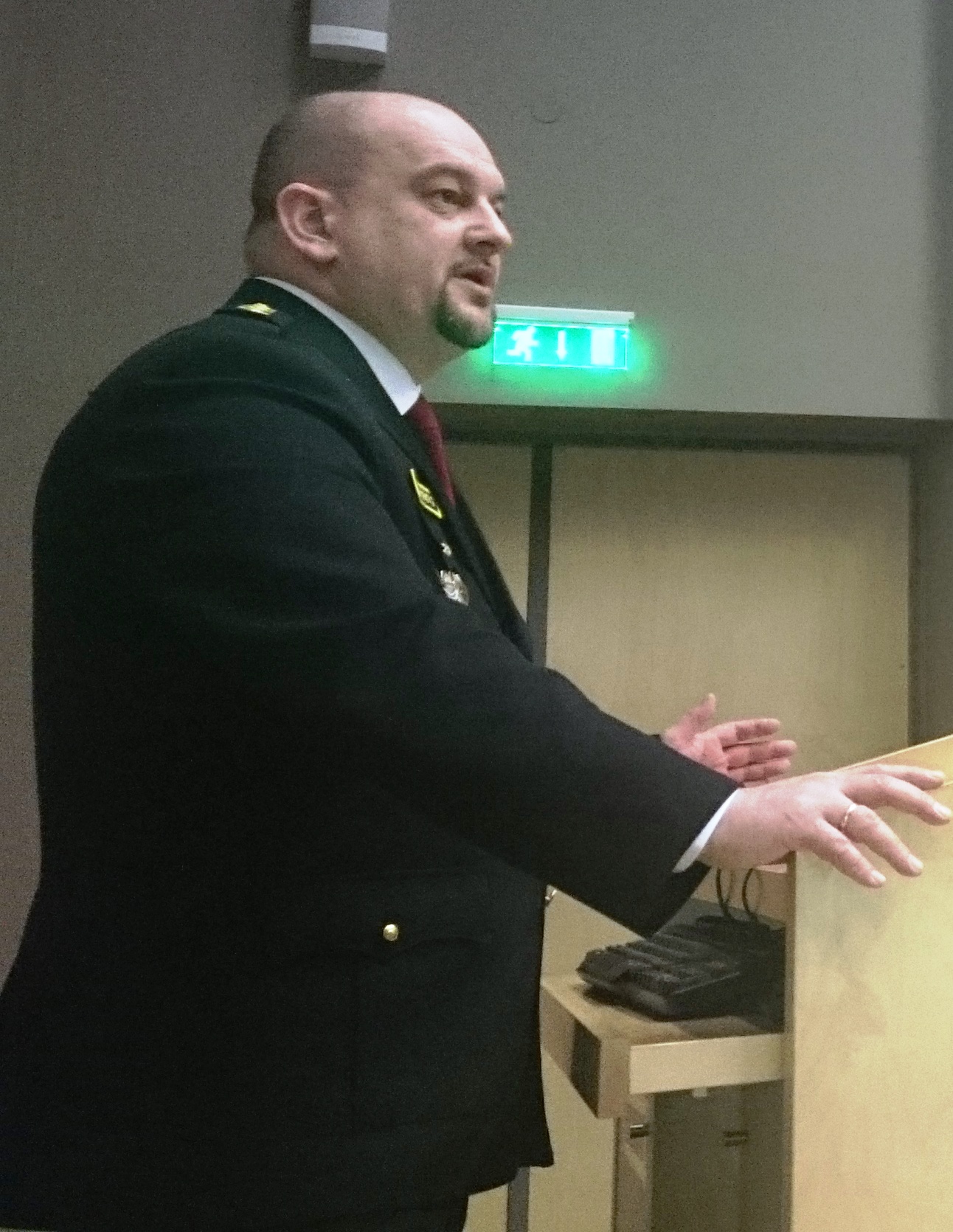 Riga Municipal police Vice Chief, with the conference (picture). The practice of cooperating with the civil society, using You-Tube accounts and radio programmes to launch a warning campaign for the young, was a truly successful combination, admitted both the Police and Riga City Council representatives. Finally, rapid amendments in the criminal law system resulted in closing the Spice shops. After 6 months of counteracting, new administrative fines were introduced for very small amounts of synthetic mixes for consumption; while selling, dealing, producing and consuming in larger quantities turned into criminal offences overnight (on April 8, 2014).
Riga Municipal police Vice Chief, with the conference (picture). The practice of cooperating with the civil society, using You-Tube accounts and radio programmes to launch a warning campaign for the young, was a truly successful combination, admitted both the Police and Riga City Council representatives. Finally, rapid amendments in the criminal law system resulted in closing the Spice shops. After 6 months of counteracting, new administrative fines were introduced for very small amounts of synthetic mixes for consumption; while selling, dealing, producing and consuming in larger quantities turned into criminal offences overnight (on April 8, 2014).Riga City Council Executive Director Juris Radzevics underlined the capacity of every society to draw its own drug policy. The Spice issue for Latvian citizens became a catalyst for change, sharpening prevention techniques as the issue of Spice-related intoxications and fatal outcomes for the young shocked Latvians and the society responded acutely.
The case of society mobilization in front of an epidemic of fatal drug intoxications in Latvia proved to be a classic case for applying risk and protection factors in prevention, said Anders Eriksson, one of the community prevention experts invited to the conference (Download conference presentation).
A striking user`s perspective was provided by Martin Dahlander, now free from Spice and other drugs for 696 days at the conference time. The near-to-death effects of Spice intoxication, the length of the “afterglow” and the types of synthetic cannabinoid mixtures one could buy using the dark web, were of special value for the EMCDDA`s scientific analyst present. After 11 years with Spice, the importance of a helping hand (CRIS; a powerful NGO assisting former addicts to return to a sober and crime-free life) and of someone who was totally dependent on Martin, was difficult to underestimate.
Latvian NGOs (www.StopDrugs.lv) admitted that it was mostly important to identify the dealers, but also to stand against the normalisation of drug use, as it seemed that everyone was using the mixes. In fact, one in six 15-16 year olds actually experimented, that made up to 5 users in each school class of 25-30 persons. One fact in common for all of the dealers was a defying demeanour, being outrageously shameless in order to smart out the law system. In that case, meeting the loathsome behaviour of the teenagers, many social workers chose to act out on the non-violent resistance parenting principles (to watch, to reflect, to support and to encourage), shared Inga Dreimane, the head of the Youth Centre “Pardaugava” (Download conference presentation).
Even if Latvian officials announce the “Spice-case” closed for the time being, the media and NGOs (www.StopDrugs.lv) still confirm the problem exists today. ECAD conclusion is that synthetic mixes need continuous monitoring in the neighbouring countries (Sweden, Norway) as it has become a legislative challenge for the drug policies in the countries of the region. Also Swedish Spice market needs to be examined for that purpose, and the project partners look forward to study visits and a conference in Stockholm to discover it this fall.
Conference Presentation materials:
"Understanding the "spice" phenomenon" (UPDATED!) Rita Jorge, Scienttific Analyst, EMCDDA, Action on New Drugs Sector, Supply reduction and new drugs unit
"Prevention in Riga, how does it work?" Vivita Kikule, Head of public Health Promotion and Prevention Unit, Riga City Council, Welfare Department
"An effective prevention: Stockholm city perspective and experience" Anders Eriksson, Prevention Specialist, Prevention Centre Stockholm, Sweden
"Space up your life; what happened in Riga in 2013-2015" Inga Dreimane, Prevention Specialist, Head of Structural Unit "Pardaugava"
"What can parents do to prevent drug and alcohol debuts?" Jörgen Larsson, Idependent Prevention Expert