
- Details
- Category: News
- Published: 20 September 2011
On September 15-16 ECAD had a conference in Veliky Novgorod, Russia with the topic ”It works! Drug Prevention from an international perspective”. The Conference was organized in cooperation with the City of Veliky Novgorod and ECAD’s National Representative in Russia, Olga Vasilyeva.
In a couple of hours before the conference was launched, ECAD met Mayor of Veliky Novgorod, Yury Bobryshev, who regarded the topic of the conference actual, also on an international scale. The Mayor stated that drug addiction is a universal issue, where all parties should cooperate constructively to succeed.
Around 70 active participants, prevention researchers, sociologists, municipal officials, teachers, law enforcement officers and politicians from 5 Russian member cities and representatives from 10 interested non-member cities, also city administrative officials from Varna, Bulgaria took part.
Present ECAD cities in Russia expressed a wish of expanding and strengthening ECAD Russian branch. This is based on the need coming from within the municipalities to prioritize prevention work and learn more about international best practice in this field. During 2 days´ conference, the participants discussed prevention strategies in theory and practice.
Two internationally ranged studies were presented, ESPAD and Örebro comparative analysis of drug abuse patterns in Sweden and Russia.
Most of the speakers and discussions were channeled towards new and developing preventative programmes in Russia. These are not many today and are also mostly youth-oriented. Prevention programmes are still not a part of each school´s educational curriculum, only separate preventative lectures are introduced.
A lack of systemic solutions and educational basis within municipal drug policy coordination were regarded as obstacles by Russian prevention researchers. At the same time, many speakers stressed the significance of rehabilitation facilities. There are only 4 state rehabilitation centers officially registered in Russia, and circa 300 rehabilitation NGOs.
There is a need for legislative support on the federal level, introducing prevention as a part of legislative framework would step up municipal preventative initiatives in Russia, agreed many participants.
It was concluded that along with social, economic and media climate changes, a general public reaction and motivation towards altering behaviour should stimulate young minds, stressing positively oriented will and thinking. Similar risk and protection factors and situation development patterns in Veliky Novgorod and Swedish city of Örebro were distinguished in particular.
Protection from group pressure, unorganized leisure time spent in the streets, mass media with its advertisements, sometimes sending an ambivalent message to the young are r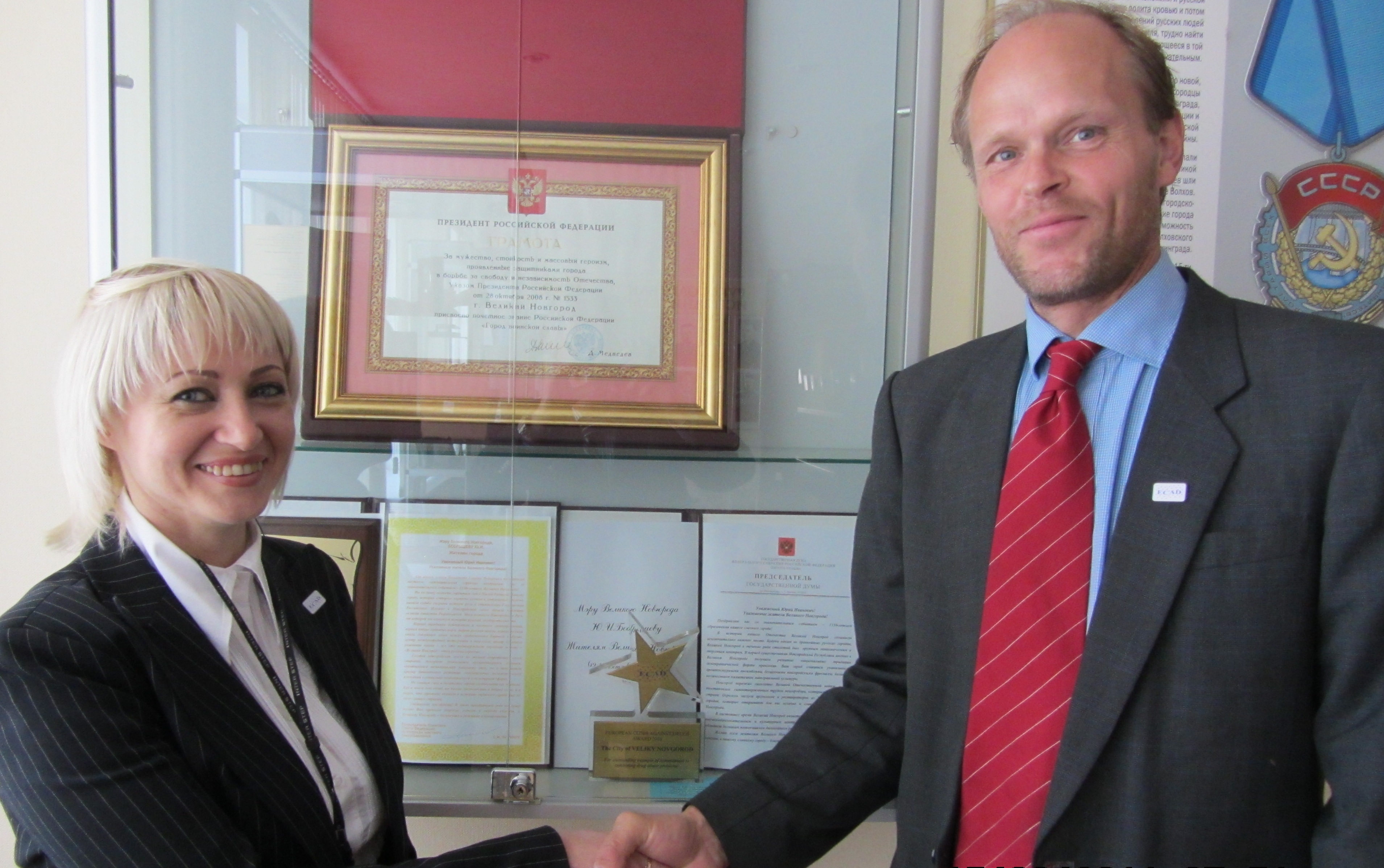 egarded as challenges and risk factors by teachers and sociologists. On the other hand, spending more time with parents, contract method as a conscious choice of health and sports, organized free time are viewed as positive factors.
ECAD is grateful to all engaged and skillful lecturers, among them Professor Natalya A. Sirota, Moscow Stomatology Institute, Professor Charli Eriksson, Orebro University and psychologist Natalya Antonova, St. Petersburg State University.
A Conference is often a finale of a lot of work carried out, a sort of a peak. A successful conference, on the contrary, is a birth and launch of new ideas, important contacts and projects.
It was obvious that the conference in Veliky Novgorod resulted in all these effects, as there were many fruitful discussions both during the questions times and at the breaks.
ECAD thank Veliky Novgorod and Olga Vasilyeva for making this Conference such an interesting event!